Department of Zoology and Biotechnology)
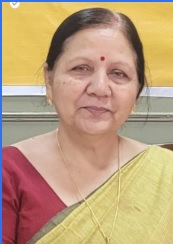 Head of Department: Dr. Sunita Sharma (Prof & Head )
Email: zoology.gsc@gmail.com
Report ( Zoological Society) 2024-25
Report ( Zoological Society) 2023-24
Zoology Curriculam Activities
About Department: Established in 1946 with the commencement of B.Sc. programs in Zoology, the Department of Zoology has built a distinguished academic legacy of over seven decades. Postgraduate studies were introduced in 1952, strengthening the department’s commitment to advanced teaching and research in life sciences. Over the years, it has been guided by eminent academicians and researchers, maintaining high standards of academic rigor, innovation, and student mentorship. Its alumni hold prominent academic, administrative, and professional positions in India and abroad, reflecting the department’s sustained academic excellence.
To address emerging interdisciplinary domains, the department introduced a self-financed undergraduate program in Biotechnology in 1999. Expanding its academic horizons further, a postgraduate program in Biotechnology was initiated in 2024. These programs complement core zoological studies and align the department with contemporary developments in biological and applied sciences.
The Zoological Museum is a significant academic and heritage resource of the institution. It serves as a valuable repository of specimens for teaching and research. The museum is regularly maintained, upgraded, and enriched in consultation with subject experts and faculty members to ensure scientific accuracy and continued pedagogical relevance.
Faculty and Research Profile
The department has 100% Ph.D.-qualified faculty members, all recognized as research supervisors. Faculty actively contribute to national and international journals and have authored book chapters in specialized areas of biological sciences. A majority are engaged in minor and major research projects funded by government agencies such as MPCST and UGC, demonstrating a strong research orientation and commitment to scientific advancement.
The alumni of the department have achieved notable success in competitive examinations such as MPSET and PSC, with many serving as Class I and Class II officers. Several graduates have been associated with wildlife, ecological, forestry, and veterinary research institutions. A significant proportion of students are also placed in private sector organizations at national and global levels, highlighting the department’s strong academic and professional foundation.
Teaching–Learning Practices
The department follows experiential and student-centric pedagogical approaches. Field visits and educational tours are organized regularly to provide practical exposure and field-based understanding. Classroom teaching is supplemented with seminars, project work, assignments, and on-the-job training to foster analytical thinking and research aptitude.
Interactive and inclusive methodologies are adopted to cater to diverse learning needs, including support for slow learners. Faculty members utilize advanced teaching aids such as OHP, charts, models, visualizers, LCD projectors, interactive boards, and museum specimens to enhance conceptual clarity and engagement. Postgraduate students actively participate in museum management, academic society activities, and awareness programs on contemporary biological issues, promoting leadership and organizational skills.
Library and Infrastructure
The department maintains a well-established PG Library-cum-Reading Room for Zoology and Biotechnology students, housing 2,640 books and 2,125 volumes of journal archives. Separate library facilities are available for Biotechnology students. The reading room provides adequate seating and a conducive environment for study and research.
Infrastructure includes three postgraduate classrooms and one combined classroom-cum-laboratory equipped with ICT facilities, an interactive board, LCD projector, Wi-Fi connectivity, computer systems, and OHP. The department also has three student laboratories (two UG Zoology labs and one UG Biotechnology lab), one research laboratory, and one inoculation room. All laboratories are adequately equipped to meet undergraduate and postgraduate curricular and research requirements.
List of Regular Faculties
| S.No | Name | Designation | Qualification | Specialization | Contact No | |
|---|---|---|---|---|---|---|
| 1 | Dr. Sunita Sharma | Professor | M.Sc., Ph.D. | Ichthyology | sunitasharma.1961@yahoo.com | 9893784886 |
| 2 | Dr. Shampa Jain | Professor | M.Sc., Ph.D. | Ichthyology | jshampacool@gmail.com | 9131642013 |
| 3 | Dr. Varsha Aglawe | Professor | M.Sc., Ph.D. | Cytology | dr.vaglawe@yahoo.com | 9826632105 |
| 4 | Dr. Ankita Bohare | Professor | M.Sc., Ph.D. | Cytology | drankita.bohare@mp.gov.in | 7354690001 |
| 5 | Dr. Neelima Painkra | Associate Professor | M.Sc., Ph.D. | Ichthyology | neelima.painkra@gmail.com | 8085407814 |
| 6 | Dr. Preeti Khare | Assistant Professor | M.Sc., Ph.D. | Ichthyology | prettykhare@gmail.com | 9425300900 |
| 7 | Dr. Manisha Saxena | Assistant Professor | M.Sc., Ph.D. | Cytology | maneeshasaxena2014@gmail.com | 9301769726 |
List of Faculty (Self-Finance)
| S.No | Name | Designation | Qualification | Specialization | Contact No | |
|---|---|---|---|---|---|---|
| 1 | Dr. Vineeta Ratoniya | Guest Faculty | MSc, MPhil, PhD | Biotechnology | vineeta2508@gmail.com | 6264608378 |
| 2 | Dr. Roopali Jain | Guest Faculty | MSc, MPhil, PhD | Biotechnology | roopalijain.jain@gmail.com | 9340098585 |
| 3 | Dr. Sohani Jain |